
The Ship I Got Certified On Before I Ever Set Foot On It
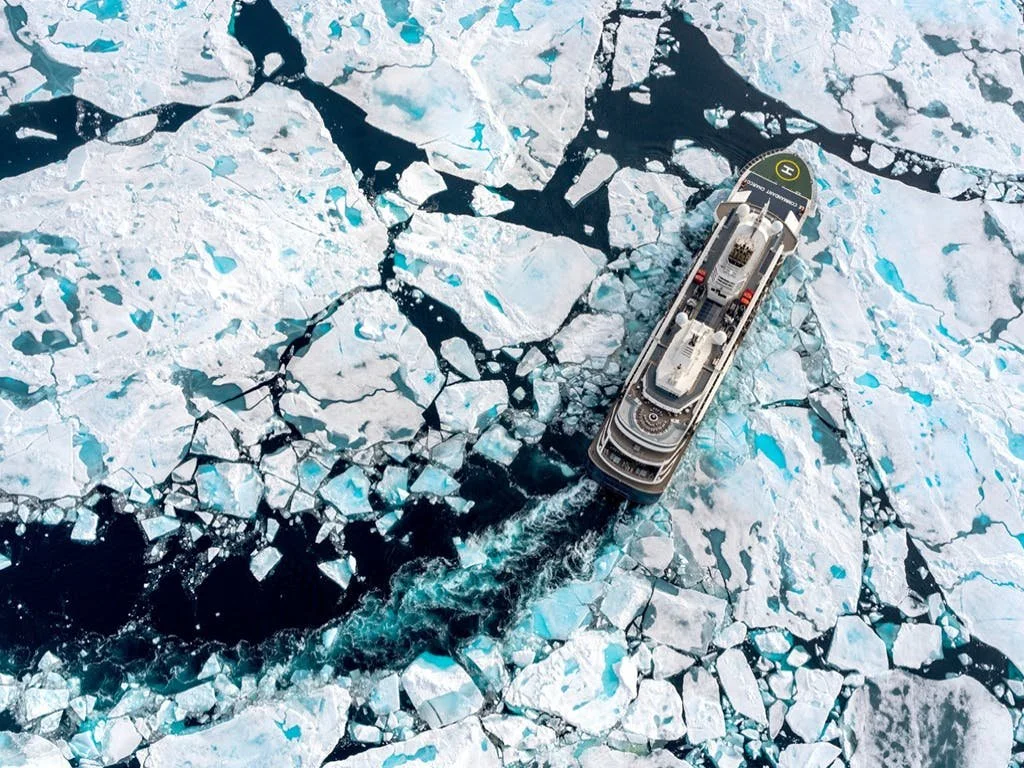
I found Le Commandant Charcot the way half the internet seems to find things lately: watching someone else's trip. Kara and Nate posted their sailing on it, and I watched the whole thing in one sitting, then went back and watched parts of it again. Not to sound obsessed, but I keep revisiting it to this day. I couldn't stop thinking about it. Not the icebergs, though the icebergs are obviously the icebergs. What got me was everything happening underneath them, on a ship that looked less like an expedition vessel and more like a five-star hotel that had somehow wandered into the Arctic.
That was years ago. Since then, I’ve become a full-time travel advisor and completed my specialist training and certification with Ponant. I haven't sailed her yet. That FAM trip is on my list, and when it happens, I'll tell you everything, the good and the ordinary, because that's how I talk about every ship I recommend. But the training alone gave me a genuinely detailed look at what sets this vessel apart from anything else in the luxury expedition category, and I think it's worth discussing now.
The energy question nobody else in the category has answered
Here's the detail that pulled me in originally and the one I keep coming back to: Le Commandant Charcot is the only luxury icebreaker in the world running on a hybrid system of liquefied natural gas and electric power. I’m acutely aware of the impact travel has on the environment. Partnering with cruise lines that strive to improve their power systems and sustainability is important to me as a traveler and advisor.
Most vessels built to break through polar ice do it on diesel, full stop. Power and emissions are simply the cost of admission to the Arctic and Antarctic. Ponant built something different on purpose. The LNG-electric hybrid propulsion was designed specifically to reduce the ship's footprint in the exact landscapes it exists to explore, which is not a small thing to get right in a category where "expedition" and "environmental impact" don't always share a sentence honestly.
It also isn't just a sustainability story. That hybrid propulsion, paired with a Polar Class 2 rating, is what lets the ship reach genuinely remote territory, including the Geographic North Pole, in a way most luxury vessels in this category simply cannot. The environmental engineering and the destination access are the same decision, not two separate ones.
What luxury actually looks like on an icebreaker
The thing that surprised me most in training wasn't the ice-breaking capability. It was how much of the ship has nothing to do with ice at all.
All 123 staterooms and suites face outward with private balconies, which is unusual for an expedition ship of any kind, let alone one built for polar conditions. The interiors lean toward a quiet, understated design, closer to a private yacht than a cruise ship, with wood paneling and soft, neutral tones that don't compete with the views outside.
The suite categories go further than I expected. Guests in suite accommodations get butler service, priority boarding, and daily canapés, along with use of a tablet and a pair of binoculars for the entire voyage, the kind of detail that tells you someone thought about the day-to-day experience of being on this ship, not just the marketing photos of it.
Onboard, there's an indoor heated pool, a smaller outdoor pool nicknamed the Blue Lagoon, a spa, a sauna, a snow room, and a fitness center. Dining includes a restaurant carrying the Alain Ducasse name, along with a more casual venue, and wine, champagne, and spirits are included in the fare, apart from the premium vintages. Wi-Fi is included throughout, which matters more than it sounds like it should when you're this far from anywhere.
How it actually compares to the rest of the category
Luxury expedition cruising has become genuinely competitive in the last few years, and it's worth being honest about where Le Commandant Charcot sits next to the other names you'll hear in this conversation.
Silversea's Silver Endeavour and Silver Origin are the most all-inclusive option in the category, right down to the butler service in every suite, and Silver Origin's tight 100-guest cap makes it the strongest specialist choice for the Galápagos specifically. Seabourn's Venture and Pursuit bring a more relaxed, boutique feel and the novelty of onboard submarines. Both are excellent ships, and both are lines I'm actively building relationships with.
What Le Commandant Charcot does that neither of those ships can claim is reach. The Polar Class 2 rating and the hybrid propulsion system give it access to true frontier territory, deep into the Arctic and Antarctic, in a way that's simply out of range for most of the luxury fleet. If the destination is the Geographic North Pole or the kind of ice that most ships have to treat as a hard boundary, this is the vessel built for it. Pair that with a genuinely serious culinary program and a design sensibility that feels more French townhouse than expedition ship, and you get a category of one.
Why I'm telling you this before I've sailed it
I could have waited to write about Le Commandant Charcot until after my FAM trip, and in most cases, that's exactly what I'd do. But the training gave me a real, detailed understanding of what this ship is and isn't, and I'd rather be upfront about where that knowledge comes from than let you assume I've already been.
So here's where things stand: I'm certified, I'm genuinely enthusiastic, and I'm actively working on getting onboard. If Antarctica, the Arctic, or the Geographic North Pole has been sitting quietly on your someday list, this is a ship worth knowing about now, while there's still time to plan around it properly. Once I've sailed her myself, I'll tell you exactly what it's like. Until then, I'm happy to talk through whether she's the right fit for the trip you're picturing.
